Emaleth
Blood CanticleEmaleth is Rowan Mayfair’s Taltos daughter, conceived during Rowan’s captivity by Lasher and born while Rowan attempted to escape. Rowan communicated with her before birth and gave her a destination and a duty: if Rowan died, Emaleth was to reach Michael Curry in New Orleans and tell him. Instead, Emaleth’s journey ended at Rowan’s bedside, where her attempt to revive her mother ended in her own death. Her brief life becomes one of Rowan’s deepest sources of grief and guilt.
Identity and Birth
While held by Lasher, Rowan conceived another child. The child spoke to her telepathically, identified herself as Emaleth, and spoke of times her father could not remember. Rowan instructed her to go to Michael at the house on First Street in New Orleans if Rowan died, so he would know of Rowan’s death. Their communication took place in silence, a private connection Rowan preserved even as Lasher anticipated the child’s birth as the fulfillment of his own desire for a bride.
Rowan escaped in the clothes she was wearing but never made it home. She was found comatose at a roadside park, and those who found her did not know she had given birth to Emaleth. Unable to rouse Rowan or obtain more milk, Emaleth began the long journey on foot toward New Orleans. The separation between mother and child thus began not with Rowan’s rejection, but with her incapacity: she could not wake to protect or care for the daughter she had taught where to go.
The Journey to Rowan
Rowan was brought home and remained in a deep coma after an emergency operation. During that time, Lasher entered the house disguised as a priest and sought help from the Talamasca and Michael. Michael fought and killed Lasher, ending Lasher’s long rule over the Mayfair family. Emaleth arrived after Lasher’s death and bent over Rowan to give her healing milk.
The milk carried a significance beyond Emaleth’s own survival. Rowan later explained that Taltos milk had curative properties and could work a cure in humans. Emaleth’s milk helped Rowan awaken from her coma. Her journey therefore achieved the purpose implicit in her mother’s instructions—she reached the family home and restored Rowan to consciousness—but Rowan’s awakening did not bring recognition or safety for the daughter who had made it possible.
Death and Rowan’s Remembrance
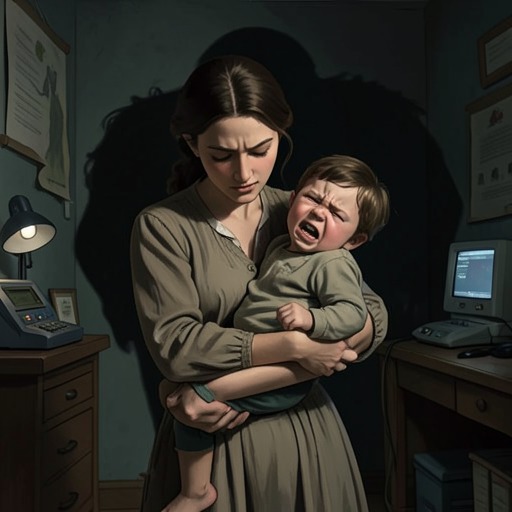
When Rowan woke and realized she was nursing from her daughter, she was horrified and frightened by Emaleth’s appearance. In that disoriented moment, she took a gun from beside the bed and killed her. Rowan later described the act plainly as her own: Emaleth had made her way to the house as Rowan had taught her, and had brought her back to consciousness with her milk. Rowan understood that Emaleth had not threatened her; her own revulsion, compounded by the traumatic association with Lasher, had warped her response.
Rowan buried Emaleth beneath an oak. In recounting the events, she remembered two graves under that tree and called Emaleth her lost girl, acknowledging that she had betrayed her. Her sorrow was not a simple lament for a child she had never known: it arose from understanding that Emaleth had followed the instruction Rowan gave her, offered the healing that revived her, and was killed by the very mother she had crossed the distance to reach.
Narrative Significance
Emaleth’s story turns an apparent rescue into a devastating reversal. The child’s telepathic bond with Rowan, her trek to New Orleans, and her curative milk all point toward connection and survival; Rowan’s fearful awakening converts those acts of care into a fatal encounter. The contrast locates the tragedy not in any harm Emaleth intended, but in Rowan’s inability, at that moment, to see her daughter apart from the alienness and terror associated with Lasher.
Rowan’s later telling makes Emaleth’s death an act of painful recognition. She names the choices she had made and the daughter who had trusted them, rather than treating the killing as an impersonal consequence of the family’s supernatural history. Emaleth remains brief in the plot, but her fate exposes the cost of fear and marks the difference between receiving care and being able to recognize its giver.